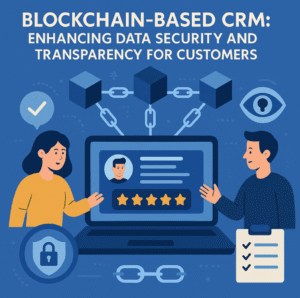
In the digital era, trust has become a critical currency in customer relationships. As cyberattacks and data breaches rise, businesses are under increasing pressure to protect customer information while maintaining transparency in how that data is used. Enter Blockchain-Based CRM—a revolutionary approach that combines customer relationship management with the power of blockchain technology to enhance data security, transparency, and trust.
What Is Blockchain-Based CRM?
Traditional CRM systems store data on centralized servers, making them vulnerable to hacking, unauthorized access, and internal misuse. Blockchain, on the other hand, is a decentralized, immutable ledger. By integrating CRM with blockchain, businesses can create a transparent and secure environment where customer data is stored, tracked, and managed in a tamper-proof way.
Every transaction or data modification is recorded in a “block” and linked to the previous one—making any unauthorized changes virtually impossible. This transparency offers customers visibility into how their data is being collected, shared, or modified, which is crucial for earning trust.
Key Benefits of Blockchain-Based CRM
1. Enhanced Data Security
Blockchain’s decentralized nature drastically reduces the risk of a single point of failure. Customer data is encrypted and stored across multiple nodes in the network, making it much harder for hackers to breach. Additionally, any attempt to alter data is immediately flagged across the entire network.
This added layer of protection helps businesses comply with data protection laws like GDPR or CCPA and gives customers peace of mind that their information is safe.
2. Full Transparency and Data Ownership
One of the standout features of blockchain is its transparency. Customers can track how their data is being used in real time. From signup to purchase history, every data point is recorded immutably, and access permissions can be shared with customers.
This transparency empowers users to feel more in control of their data—turning passive data subjects into active participants in the relationship. In turn, this builds long-term loyalty and credibility for the brand.
3. Smart Contracts for Automated Engagement
Blockchain-based CRMs can leverage smart contracts—self-executing programs that run when specific conditions are met. For example, a smart contract could automatically trigger a loyalty reward after a customer completes a certain number of purchases or referrals.
This removes the need for intermediaries and ensures fair, real-time fulfillment of offers and promises, further strengthening trust and engagement.
4. Elimination of Data Silos
Blockchain helps unify fragmented customer data spread across different platforms. By providing a single, secure source of truth, businesses can create a 360-degree view of the customer while ensuring data integrity. This enables more accurate analytics, better personalization, and smarter decision-making.
Challenges to Consider
While promising, blockchain-based CRM is still in its early stages. Implementation can be complex and requires infrastructure upgrades. Additionally, educating customers about blockchain’s benefits will be essential for wide adoption.
However, as data privacy concerns grow, the demand for more transparent and secure systems will likely accelerate the shift toward blockchain solutions.
Conclusion
Blockchain-based CRM is more than a technological upgrade—it’s a paradigm shift in how businesses handle customer data. By combining the strengths of blockchain with CRM, companies can offer a more secure, transparent, and trustworthy experience.
In a world where trust is everything, blockchain may be the foundation for the next generation of customer relationships.