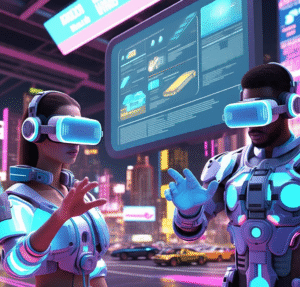
The metaverse—a rapidly emerging digital universe where people work, play, socialize, and even own virtual property—promises to reshape nearly every industry, and insurance is no exception. As digital lives become more complex and valuable, the question is no longer if insurance will be needed in the metaverse, but how it will evolve to protect users in entirely new virtual environments.
In this interconnected realm of augmented and virtual realities, policyholders of the future may no longer be defined solely by their physical lives. Instead, they will exist as digital personas with assets, identities, relationships, and reputations that need protection. From virtual real estate in platforms like Decentraland to digital collectibles, avatars, and even in-game businesses, users are accumulating significant value in virtual spaces—value that is just as vulnerable as any real-world asset.
Digital Risks, Real Consequences
The metaverse introduces a host of new risks: identity theft of avatars, data breaches involving personal or financial information, cyberbullying, intellectual property disputes, and even damage to virtual property due to bugs or hacking. As immersive platforms grow, these risks become more serious, blurring the line between digital and physical consequences.
Imagine someone losing access to a virtual storefront where they earn real income, or having their NFT-based identity stolen and misused across platforms. These aren’t futuristic hypotheticals—they’re issues already surfacing in today’s early-stage metaverse. Insurance must adapt quickly to provide digital-first coverage.
Blockchain and Smart Contracts
One of the key enablers of insurance in the metaverse will be blockchain technology. Blockchain not only secures digital transactions but also supports the creation of smart contracts—self-executing agreements coded to trigger payouts automatically when predefined conditions are met.
In the metaverse, this means insurance claims could be processed instantly and transparently. For example, if a virtual property is destroyed in a platform glitch or a hack, a smart contract could verify the event through digital oracles and release compensation without human intervention. This frictionless model has the potential to redefine the customer experience in profound ways.
Hyper-Personalized Coverage
Avatars in the metaverse may come with digital health, wealth, and behavior metrics that allow insurers to offer hyper-personalized policies. Instead of generalized coverage, AI-driven systems could assess individual digital footprints to provide tailored insurance based on how, when, and where users interact in the virtual world.
This level of personalization offers both benefits and challenges. While it could improve accuracy and affordability, it also raises ethical concerns around surveillance, privacy, and data ownership—issues that will need to be addressed as digital environments evolve.
The Future of Trust and Regulation
With decentralized platforms and virtual economies, questions of governance and trust become even more important. Who regulates metaverse insurance? How are disputes resolved? Future insurers will likely operate in a hybrid space, balancing decentralized trust mechanisms like DAOs (Decentralized Autonomous Organizations) with legal frameworks across multiple jurisdictions.
Conclusion
As the boundaries between physical and digital lives continue to dissolve, the concept of what it means to be a policyholder will expand. Insurance in the metaverse won’t just be about covering digital risks—it will be about enabling safe, trusted participation in entirely new forms of existence. The future policyholder is not just a person, but a persona—a blend of human identity and digital presence navigating a world where protection must evolve as rapidly as innovation itself.