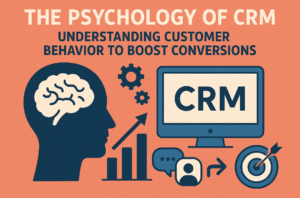
In the age of data-driven marketing, Customer Relationship Management (CRM) has evolved far beyond storing contact details. To truly optimize CRM for business growth, understanding the psychology behind customer behavior is crucial. By tapping into what drives consumer decisions, companies can craft more effective strategies that don’t just retain customers—but convert them.
Why Psychology Matters in CRM
Every click, inquiry, and purchase is driven by human emotion and reasoning. Psychological principles—such as trust, familiarity, reciprocity, and social proof—play a significant role in how customers interact with brands. A CRM system that integrates behavioral insights can reveal not just what customers are doing, but why they are doing it.
This deeper understanding allows businesses to tailor their messaging, timing, and approach to meet customers where they are mentally and emotionally—leading to higher engagement and conversions.
Mapping the Customer Journey
CRM tools help map the customer journey, but psychology gives meaning to each step. For instance:
-
Awareness stage: Customers are curious but cautious. They seek information and reassurance.
-
Consideration stage: They begin comparing options and look for social proof and trust signals.
-
Decision stage: Emotions like urgency, fear of missing out (FOMO), and reward anticipation can strongly influence purchase behavior.
Using psychological insights at each touchpoint—like highlighting limited-time offers (urgency) or showing testimonials (social proof)—can effectively nudge customers closer to conversion.
Segmentation and Personalization
Psychology tells us that people respond better to communication that feels personal and relevant. CRM platforms allow for segmentation based on behavior, demographics, and preferences. When paired with psychological understanding, this allows for hyper-targeted strategies.
For example, a CRM might segment customers by inactivity. A psychological approach would suggest that an emotional re-engagement message (“We miss you!”) could trigger a return based on guilt or nostalgia—emotions proven to influence behavior.
Behavioral Triggers and Automation
CRM systems often include automated workflows, but their true power comes when those workflows are informed by behavioral science. Triggers based on actions—like abandoning a cart or browsing specific pages—can activate emails or messages that appeal to motivation, scarcity, or curiosity.
Messages that anticipate customer needs based on behavioral patterns are perceived as helpful rather than salesy, increasing the likelihood of conversion.
Trust and Relationship Building
Trust is a fundamental psychological factor in customer retention and conversion. CRM tools help build trust over time through consistent communication, personalized offers, and quick issue resolution. The key is consistency—something CRM automation excels at.
By tracking past interactions and ensuring continuity, customers feel “known” by the brand, which reinforces trust and fosters loyalty.
Conclusion: Humanizing CRM Through Psychology
CRM is no longer just a tech tool—it’s a human tool. When combined with psychological insights, it becomes a bridge between data and empathy. Businesses that understand their customers’ minds can predict their actions, speak their language, and meet their emotional needs.
In the end, conversions aren’t just about clicks—they’re about connection. And psychology is the key to creating CRM experiences that convert, retain, and delight.